Digital Independence According to the EU: What the New Rules Mean for Enterprise IT and AI
June 18, 2026


Author
Enterprise IT is going through one of the biggest shifts in recent years. AI is moving from the experimental phase into real business operations and is starting to influence sales, customer support, administration, manufacturing and internal management. This raises a crucial question: where does AI run, what data does it work with and who is really in control of it?
The European Union is putting increasing pressure on technological sovereignty, secure cloud infrastructure, data control and support for open source technologies. For Czech companies, this is not just a political topic from Brussels. It is a practical question of security, costs, compliance and long-term competitiveness.
Companies that implement AI without a clear architecture can quickly create new technological debt. Those that approach it correctly gain a tool that will serve their business in the long run.
This topic follows the current European Commission technology sovereignty package, which focuses on strengthening Europe’s digital autonomy, cloud infrastructure, AI and open technologies.
Why digital independence is not just theory
Technological sovereignty may sound like a political term. In practice, however, it means something very specific: a company should not be fully dependent on the decision of a single vendor, a single platform or a foreign government.
This problem is well illustrated by the still highly relevant case of Anthropic. In its official statement, the company said that the US government had issued an export directive requiring the suspension of access to the Fable 5 and Mythos 5 models for foreign persons. Reuters added broader context to the case, describing concerns by the US Department of Commerce about the possible misuse of these models by foreign military intelligence organizations.
The case shows that access to key AI infrastructure does not have to be only a technical or commercial matter. It can also be affected by geopolitical decisions outside the control of a European company.

This is why it makes sense to build enterprise AI in a way that is secure, portable and independent of a single vendor. It does not mean rejecting all commercial models. It means having an architecture in which the company controls its data, can switch models and is not existentially dependent on one platform.
Three risks of unmanaged AI implementation
Many companies start simply. Employees use public chatbots, teams test various AI tools and the first integrations are built on top of commercial models from global providers.
For pilot projects, this can make sense. But for real business operations, it is no longer enough to focus only on the quality of the answers. It is important to know where the data flows, who has access to AI, how prompts are logged and how the system is connected to business processes.
- The first risk is losing control over data. AI works with documents, orders, contracts, customer history and technical documentation. If this data is sent into an environment over which the company does not have sufficient control, it creates both a security and legal risk.
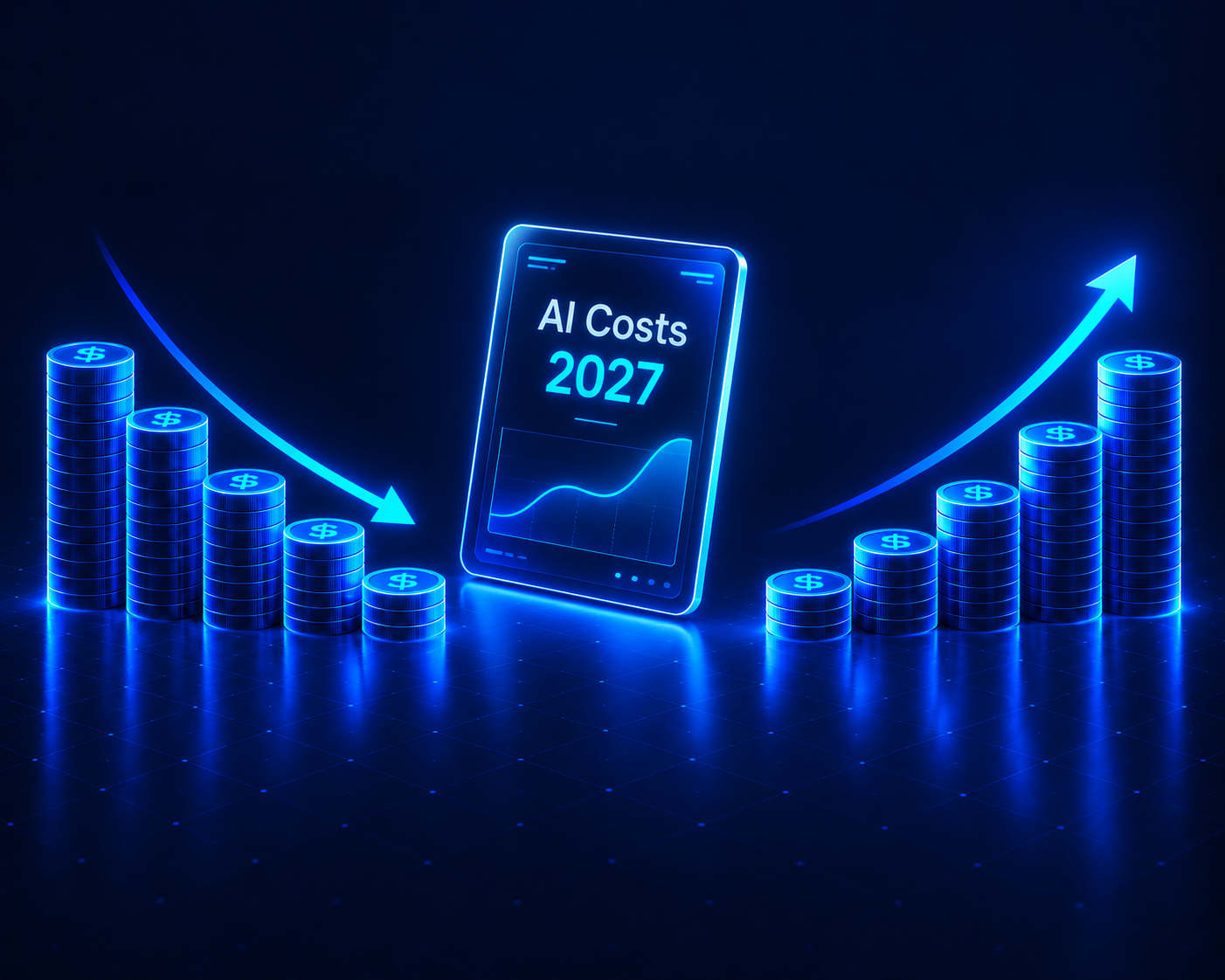
- The second risk is cost. Payments for prompts, tokens or licenses may be negligible when usage is low. But once AI spreads across the entire company, costs can grow quickly. That is why it is important to design a solution that is economically sustainable in the long term.
- The third risk is dependency on a single vendor. If a company builds key processes on one closed system, it becomes dependent on its prices, terms and availability. An open architecture helps reduce this dependency.
Open source as part of an enterprise AI strategy
Open source is no longer a marginal alternative. It is becoming an important part of the European discussion about digital independence and technological competitiveness.
Modern open models have come significantly closer to commercial solutions in many practical tasks. This gives companies the opportunity to run AI in their own environment, in a private cloud or with a verified European provider.

Original image source: TechTarget.
But open source is not a one-click solution. The model is only the foundation. To create real value, it needs quality data, secure infrastructure, integration into existing systems and continuous measurement of results.
What determines the success of enterprise AI
The real value of AI does not come from simply deploying another chatbot. It comes when AI is connected to specific processes and starts helping with measurable results.
A typical example is an internal AI system connected to CRM, ERP, helpdesk, documentation or the company knowledge base. Such a system works only with authorized data, respects user roles, logs activity and its impact can be measured against business or operational KPIs.
Quality data is the foundation. If documents are outdated, CRM data is incomplete and processes exist only in employees’ heads, AI will not be reliable. That is why the first step is often to clean and connect data sources.
Secure architecture is also essential. Some tasks can run through commercial APIs, while others should stay in a private cloud or directly on the company’s infrastructure. The deciding factors are data sensitivity, security requirements and operating costs.
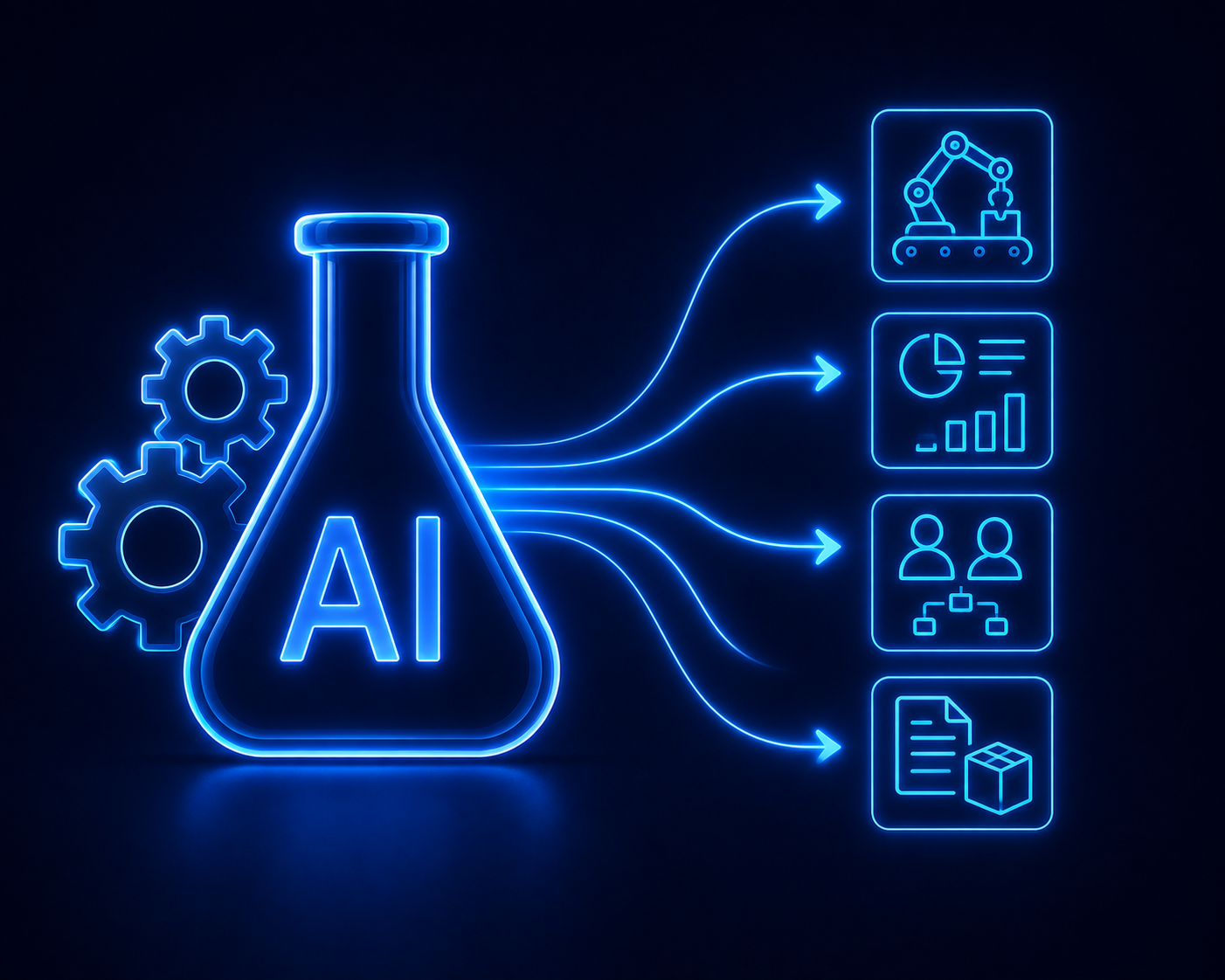
AI delivers the greatest value when it is well integrated. It can help sales teams prepare offers, support teams find answers, management analyze reports or operations automate repetitive work.
Private or hybrid AI
The AI debate is often simplified into a choice between commercial models and open source. In practice, the answer is more complex.
For some tasks, advanced commercial models are the right choice. For others, open source in a private environment makes more sense. In most companies, the best approach will be hybrid.
The brand of the model is not what matters most. What matters is that the company has control over its data, costs, security, integrations and future development.
These are exactly the kinds of projects we work on in practice. Take a look at our case studies, where we show what technology connected to real business processes can look like.
Techmates: sovereign AI as a core principle
At Techmates, we do not treat AI as an isolated tool or as a quick reaction to a current trend. From the very beginning, we have followed the principle that enterprise AI should be secure, practical and built so that the company keeps its data and key processes under control.
We design our solutions so that they are not dependent on a single vendor, a single model or one closed platform. This is not AI separated from data. It is AI that works with data safely, in a controlled way and within an architecture that the company owns and controls.
We do not build generic chatbots disconnected from the reality of your company. We design practical AI solutions that fit into your existing IT environment and can be developed over the long term.
We help companies clean their data flows, design secure architecture, choose suitable models and connect AI with ERP, CRM, helpdesk, documentation and other internal systems.
Depending on the specific situation, we design private, hybrid or cloud-based solutions so that they make sense technically, economically and from a security perspective.
Our goal is not to implement AI at any cost. Our goal is to create a system with clear business value, measurable results and long-term value for your company.